

The real brand of a church is not hanging on the wall. It is sitting in the seats.
It is not the mission statement, the logo, the denominational label, or the list of values on the website. Those things may describe who we hope to be. The people we form reveal who we are actually becoming.
The disciples are the brand.
That is not meant as an insult. It is a way of naming something the church has always known: people are formed by what they repeatedly do.
We can say we value prayer, but if prayer is only used to open meetings and transition between songs, we are teaching something about prayer. We can say we value community, but if most of our life together happens while facing a stage, we are teaching something about community. We can say every believer is called to ministry, but if paid professionals do the important ministry, we are teaching people where ministry really belongs.
Our practices are always preaching.
James K. A. Smith has written extensively about the way repeated practices shape our desires. We are not formed only by the ideas we agree with. We are formed by the routines, habits, environments, and stories that train us to want certain things. That means a church can preach one message while its systems preach another.
We can preach participation while building everything around observation.
We can preach sacrifice while advertising personal benefit.
We can preach belonging while making it easy to remain unknown.
We can preach that every person has a calling while paying a small group of people to carry most of the church’s calling for us.
What kind of disciple does that form?
Often, it forms a person who expects
excellence without participation,
community without vulnerability,
conviction without too much discomfort,
and ministry without much personal responsibility.
It forms people who admire generosity, outreach, diversity, justice, and care for the hurting, but mostly want to be associated with churches that do those things.
We like knowing somebody is feeding people. We like seeing the pictures. We like wearing the shirt. We are less certain we want to learn anyone’s name, rearrange our schedule, open our home, or remain in a relationship that asks something costly from us.
This is where church values can become another kind of branding. We say, “We are a generous church,” when what we sometimes mean is that the church budget pays someone to do generous work. We say, “We care about our community,” when what we sometimes mean is that we enjoy being associated with a staff-led outreach program. We say, “We value discipleship,” while assuming the pastor’s content will do the discipling for us.
That does not mean the values are fake. It means association is not the same as formation.
Watching someone serve does not make me a servant. Listening to someone pray does not make me a person of prayer. Attending a church that welcomes people unlike me does not mean I have learned to love people unlike me. Applauding a baptism does not mean I am making disciples.
The people our churches form eventually tell the truth about the churches we have built.
If we form people who shop, rate, consume, complain, and leave when their preferences are no longer centered, we cannot dismiss them as immature Christians and move on. We must ask how our shared life trained them to understand the church that way.
Pastors must ask it. Church boards must ask it. Worship leaders and ministry directors must ask it. Congregations must ask it. I must ask it.
What are our practices making of us?
Are we becoming more patient?
Are we learning to confess?
Can we forgive without pretending nothing happened?
Can we remain present when a relationship becomes uncomfortable?
Are we growing in courage, generosity, gentleness, and prayer?
Are we learning to carry one another’s burdens instead of asking staff members to carry them for us?
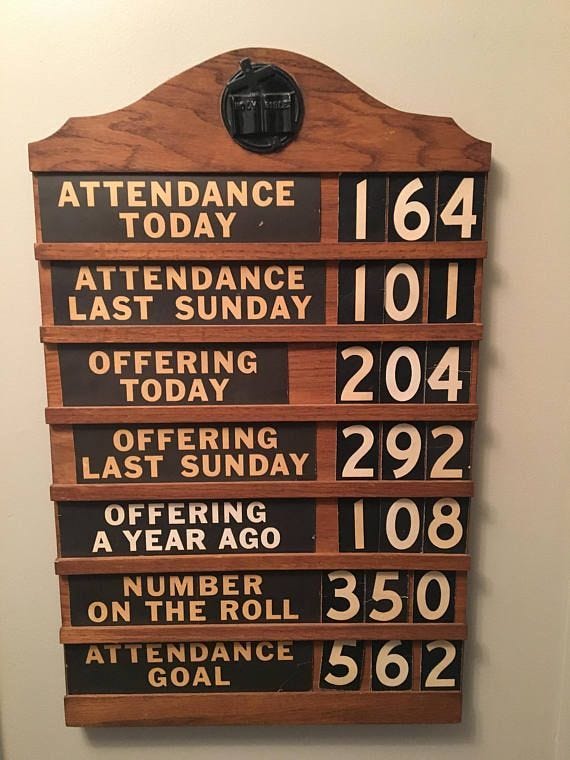
This is not a measurement we can place neatly on a dashboard. It is slower and harder to count. It may be one reason we prefer attendance, giving, views, and volunteer numbers. Those figures tell us something, but they cannot tell us whether people are becoming like Christ.
Our churches may say many good things about themselves. The deeper question is what our life together is teaching people to love.
The answer is our real brand.