

It’s currently fall. This morning, I picked up the phone to check the weather and, two minutes later, after checking a couple of emails, realized I still had absolutely no idea what the weather was gonna do today.
I opened my phone with one simple purpose. But then I noticed a text message. Someone is upset about something. Then there’s a reel someone sent me, and apparently there’s a kitchen gadget I’ve foolishly been living without. Then I saw that Carolina barely beat WCU in their season opener— feeling lackluster about the new coach again.
Meanwhile, I still don’t know whether I need a jacket. (I didn’t)
It’s funny until I realize how much of my life feels like that.
I’m taking things in all day long. Information. Opinions. Other people’s emergencies. My own worries. News. Politics. Responsibilities. And sometimes, by the time I get quiet enough to pay attention to God, I’m already worn out.
I don’t think it’s just me. We live in a world that has become remarkably good at capturing our attention and remarkably poor at helping us cultivate it (especially during election cycles).
And I’m deeply concerned about what that’s doing to our souls.
We’ve Confused Hearing with Receiving
In Matthew 13, Jesus tells a familiar story about a farmer scattering seed.
Some falls on the road. Some lands among rocks. Some falls where weeds are growing. And some finds good soil, takes root, and produces an extraordinary harvest.
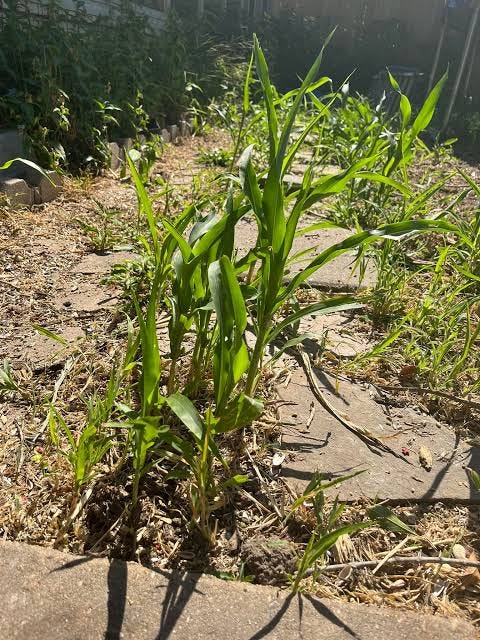
We often approach this parable as a classification exercise. Which kind of soil am I? Which kind is my neighbor? (And if we’re being particularly spiritual, which kind is my spouse?) But I think we miss something important when we read it that way.
The farmer is remarkably generous with the seed. He’s scattering it everywhere. Wjen I preached from this passage recently, I playfully threw a huge bag of Jolly Ranchers all over the room while someone read the text.
And I hit Brittany in the face. I’m sorry, Brittany.
The point is this: God’s good news is offered abundantly. The story begins with something good being given. And Jesus seems deeply interested in what happens after we hear it.
There’s a difference between hearing something and receiving it deeply enough to change us. I can sit through a sermon, sing every word of a worship song, recognize every theological phrase, and still leave essentially unchanged. I’ve done it. Check.
I’ve caught myself singing about the goodness of God while counting how many lights are out in the ceiling above. The words are coming out of my mouth. My attention is somewhere else entirely. But if I close my eyes, maybe the church people will think I’m more spiritual than I really am.
The first step toward spiritual maturity isn’t pretending. It is a simple, honest prayer:
Jesus, I’m distracted. I’m tired. I want to be present with you. Help me.
That counts as prayer, by the way. We don’t have to manufacture a spiritual experience before we can turn toward God. We can offer him the attention we actually have, even when it’s a little ragged.
Sunday Enthusiasm Needs Tuesday Roots
Jesus describes another kind of soil: rocky ground. The seed springs up quickly. There’s enthusiasm, excitement, immediate growth. But there isn’t enough depth for roots, and when difficulty comes, the growth doesn’t last.
The church needs to pay attention to this. We have become quite good at creating moments of spiritual enthusiasm. And I’m not against those moments. I’m Pentecostal, for goodness’ sake. I believe deeply in the work and presence of the Holy Spirit. I love passionate worship. I love the moments when God’s presence feels almost tangible. I fondly long to hear the elders in the room praying in tongues.
I’ve also been around church long enough to know that Sunday eventually gives way to Tuesday. The situation you prayed about is still unresolved. The relationship is still difficult. The bills still need paying. The person you’re trying to love is still hard to love. Sometimes that difficult person is yourself, and the feeling that carried you on Sunday no longer carries you.
That doesn’t mean Sunday was fake.
It means we need roots.
Spiritual maturity cannot be measured solely by the intensity of our experiences. It must also be measured by the depth of our formation. Depth takes time. My Pentecostal people need to chew on this.
Think about the relationships that matter most in your life. So much of their strength was built in ordinary moments. Conversations in the car. Meals around a table. Showing up when there wasn’t much to say.
I drive my thirteen-year-old son to school in the mornings. Some days, there’s not much conversation. But there’s presence. There’s consistency. A relationship is forming in the ordinary rhythm of being together. I think our life with God works something like that.
Some mornings, prayer will feel ordinary. Some passages of Scripture don’t immediately produce profound revelation. There are moments when all we can manage is, Here I am again, Lord. And that’s good enough for today.
Because roots grow in places nobody sees.
What Is Crowding Out Your Life?
Then Jesus talks about the weeds. Not the vape-store variety—the kind that grows in the concrete cracks. Here, the seed actually grows, but so does everything around it: worry, anxiety, the hustle, the comparisons.
Eventually, the life that was beginning to grow gets crowded out. This one gets uncomfortably close to home. Most of us don’t wake up in the morning and deliberately decide to push God out of our lives. We just wake up already full.
There’s a bill to pay. A child we’re worried about. A health concern. A difficult conversation we’ve been avoiding. A job that demands more than we have to give. Then, we check the news, because apparently our own anxieties aren’t sufficient. We need access to everyone else’s, too.
Before long, worry becomes the air we’re breathing. And somewhere in the middle of it all is the persistent promise that just a little more will finally make us secure: more money, more certainty, or just a little more control.
Jesus doesn’t dismiss our legitimate needs. He knows that paying bills matters. He understands that life can be genuinely difficult. But he also knows how easily the pursuit of security can consume the very life we’re trying to secure. I hear compassion in his warning.
He’s inviting us to notice what’s crowding the life out of us. I want to be careful here: experiencing anxiety doesn’t mean you’ve failed God. Some of us are carrying genuinely heavy things, and we need help carrying them. BUT, prayer gives us somewhere to bring what is real.
Lord, I’m scared about money.
I don’t know what to do about this relationship.
I keep trying to control something I cannot control.
We don’t have to clean up our worries before bringing them into God’s presence. We bring them as they are. And, perhaps, we begin paying attention to what we’re allowing to feed them. Sometimes, for me, that means putting down my phone. The next thing I read probably won’t give me the peace I’m looking for.
Maybe Revival Looks More Like Roots
Finally, Jesus describes the good soil. The word is heard, received, understood, and held onto. And eventually, it produces fruit.
In the Gospels, this story appears in a few places: Matthew emphasizes understanding, Mark speaks of accepting the word, and Luke describes holding onto it with perseverance. Different emphases, but a shared picture: a life that makes room for God’s word and stays with it.
What does that life produce?
Perhaps the fruit looks less spectacular than we’ve been taught to expect.
Perhaps you listen to someone without preparing your defense.
Perhaps you notice a neighbor you’ve been too busy to see.
Perhaps you finally tell the truth about something you’ve been hiding.
Perhaps you’re still afraid, but instead of pretending you’re fine, you reach out for help.
Perhaps you become a little more patient, a little more generous, a little less defensive, a little more like Jesus.
Galatians 5 calls these “perhaps things” the fruit of the Spirit. I believe we’ve spent too much time looking for extraordinary spiritual experiences while overlooking God's extraordinary work in ordinary transformation.
Revival isn’t simply about what happens when we gather. It’s about who we’re becoming when we scatter.
The world doesn’t just need churches that know how to have powerful services. It needs people whose lives are being shaped by the love, patience, humility, and generosity of Jesus. People who don’t simply know what Jesus said, but are actually becoming like him.
The God Who Met You Then Is Meeting You Here
There’s something else I’ve been thinking about.
I can look back on earlier seasons of my faith and remember moments when God felt especially close. A particular Sunday night worship service. A song. A season when I knew, beyond any doubt, that Jesus had found me. Places I’ve sown tears into the carpet.
I’m grateful for those memories.
Sometimes I find myself wanting to return to everything surrounding those experiences, hoping I can somehow feel them again. Maybe you understand that. We remember the places where we knew we were known.
But the invitation of discipleship isn’t to spend our lives trying to recreate yesterday’s encounter with God. It’s to bring that same openness into the life we actually have today. The God who met us then meets us here. At this age. With these responsibilities. With these questions. With the disappointments we didn’t anticipate and the challenges we never imagined.
And there is still room to grow.
Not necessarily in numbers, programs, buildings, or influence. But in the depth of our love. The steadiness of our faith. The generosity of our lives. The way we treat people. The way we listen. The way we make room for God.
We are being formed every single day by what we give ourselves to. The question is whether we’re paying attention to what we’re becoming.
So maybe this week, instead of trying to do something extraordinary, we could begin with something simple. Read a short passage of Scripture slowly. Sit with it. Notice a phrase that catches your attention. Talk to God about it. Then be quiet for a moment.
When your mind wanders, gently come back. You haven’t ruined the prayer. You’re learning to be present. Give the seed some room. Give the roots some time. And trust that the God who began a good work in you is still at work.
Dear Church, there’s still room to grow.
And that’s very good news.